Roboflow
Learn how to effortlessly train a computer vision model in just an afternoon using captivating and diverse images. Discover simple and effective techniques to optimize your model’s performance, all within …
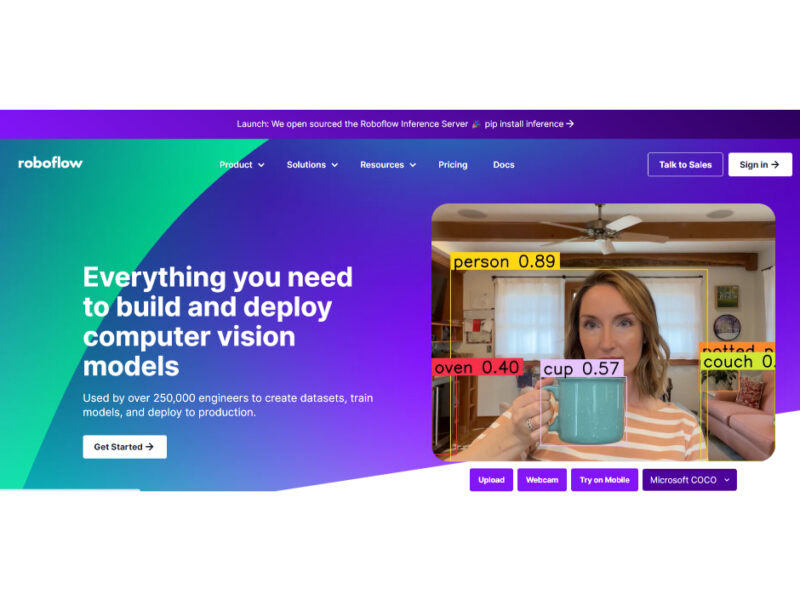
About Roboflow
Use Cases
Use Case 1: Automated Quality Control in Manufacturing
Problem: Manual inspection for defects (like scratches, dents, or missing components) on a high-speed production line is prone to human error, leads to inconsistent quality, and slows down the manufacturing process.
Solution: Roboflow allows manufacturers to build custom computer vision models to detect defects in real-time. Using the "Rapid" prompt-to-model feature and AI-assisted annotation, teams can quickly create a dataset of "good" vs. "defective" parts and deploy the model directly to the factory floor.
Example: An automotive supplier captures images of engine blocks. They use Roboflow to augment these images (creating 50 versions each to account for different lighting) and train a model that detects missing bolts. The model is deployed to an edge device (like an NVIDIA Jetson) that triggers a robotic arm to remove faulty blocks from the belt.
Use Case 2: Real-Time Inventory Tracking for Logistics
Problem: Large warehouses and freight companies lose significant time and money manually counting pallets, packages, or shipping containers, often leading to data discrepancies in inventory management systems.
Solution: By utilizing Roboflow’s counting and tracking capabilities, businesses can automate inventory audits. The platform’s ability to integrate with existing camera hardware (like Reolink or FLIR) allows for seamless monitoring of goods as they move through a facility.
Example: A logistics company installs cameras at loading docks. A Roboflow workflow is configured to count every pallet entering a truck. The data is sent via API to the company’s SAP system, ensuring that the digital inventory matches the physical shipment without a worker needing to scan items manually.
Use Case 3: Safety Compliance and PPE Monitoring
Problem: In high-risk environments like construction sites or chemical plants, ensuring all personnel are wearing Personal Protective Equipment (PPE) such as hard hats and high-visibility vests is a constant safety and insurance challenge.
Solution: Organizations can use Roboflow to curate a dataset of safety gear and train a "Detection" model. Because the infrastructure is HIPAA and SOC2 compliant, it can safely handle sensitive workplace data.
Example: A construction firm uses Roboflow to build a safety monitoring app. They deploy the model to their existing site cameras; if the system detects a worker without a helmet in a restricted zone, it automatically sends a real-time alert to the site supervisor’s mobile device.
Use Case 4: Precision Agriculture and Crop Health Monitoring
Problem: Farmers and agricultural enterprises need to identify pests, diseases, or nutrient deficiencies across hundreds of acres, which is labor-intensive and often results in late interventions.
Solution: Roboflow’s low-code tools allow agricultural tech companies to process drone or tractor-mounted camera footage. Using "Autodistill," they can use large foundation models to automatically label vast amounts of field data to train smaller, faster models for use in the field.
Example: A vineyard owner uploads drone photos to Roboflow to identify signs of leaf blight. After training a model to recognize the early yellowing of leaves, they deploy it to a smartphone app. Field workers can then point their phone at a vine to get an instant AI-driven health assessment.
Use Case 5: Enhancing Retail Customer Experience with Visual Search
Problem: Customers often struggle to find specific products in large retail environments, and staff may not always be available to assist with "where is this item?" queries.
Solution: Using Roboflow’s "Analyze" and "Curate" features, retailers can build a visual search engine that understands their specific inventory, allowing for better organization and customer-facing tools.
Example: A large building materials supplier uses Roboflow to catalog thousands of hardware parts. They build a customer kiosk where a contractor can hold up a specific, rare bolt to a camera; the Roboflow-powered system identifies the exact part number and tells the customer which aisle and bin it is located in.
Key Features
- AI-assisted image annotation tools
- Automated dataset augmentation engine
- Prompt-to-model rapid training
- Scalable cloud and edge deployment
- Integrated model performance evaluation
- Collaborative dataset management pipeline
- Hosted inference server API
Similar Tools You Might Like
Discover more tools in the same category

Brancher AI
Brancher.ai is a groundbreaking platform that enables users to create and share AI-powered applications without …
Entry Point
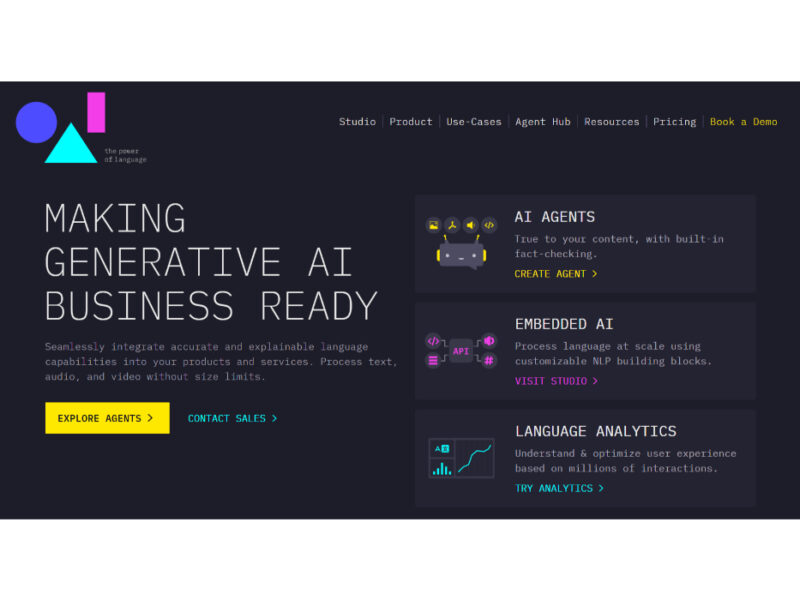
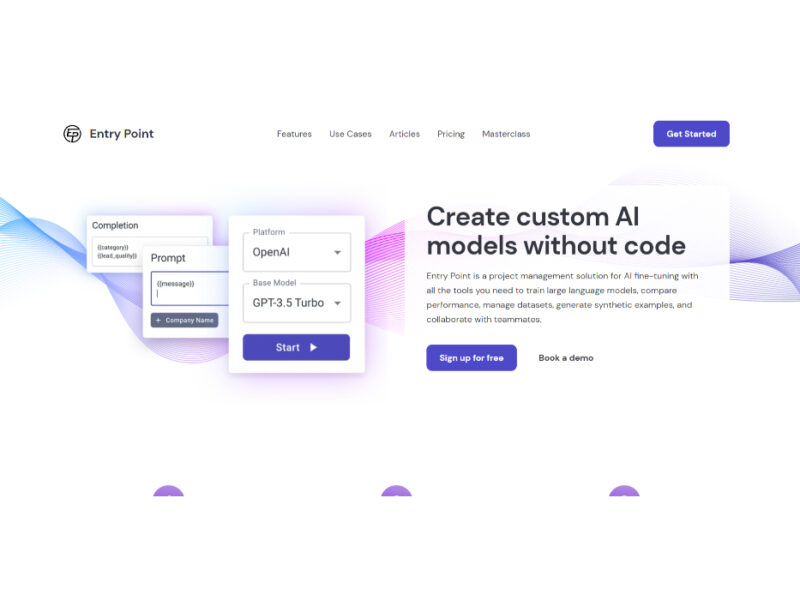
Entry Point is a groundbreaking platform that democratizes the use of artificial intelligence for businesses …
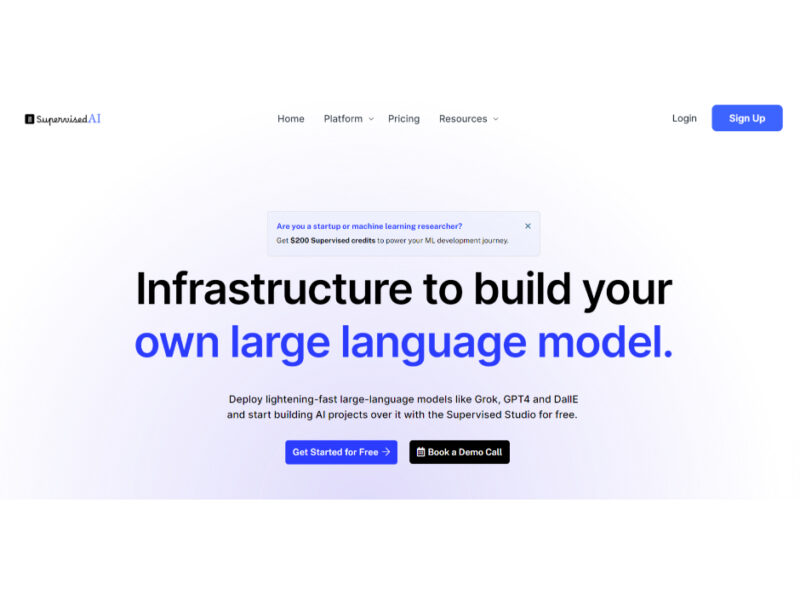
Supervised AI
Supervised AI is an innovative AI development platform designed to enable both enterprises and individual …
Explore Related Categories
Live Preview:
Updates automatically with live stats
Copied to clipboard!