Resume AI Scanner
PDF.ai’s Resume AI Scanner is a cutting-edge tool designed to optimize the candidate evaluation process for recruiters, hiring managers, and talent acquisition specialists. Utilizing AI-driven technology, this tool offers a …
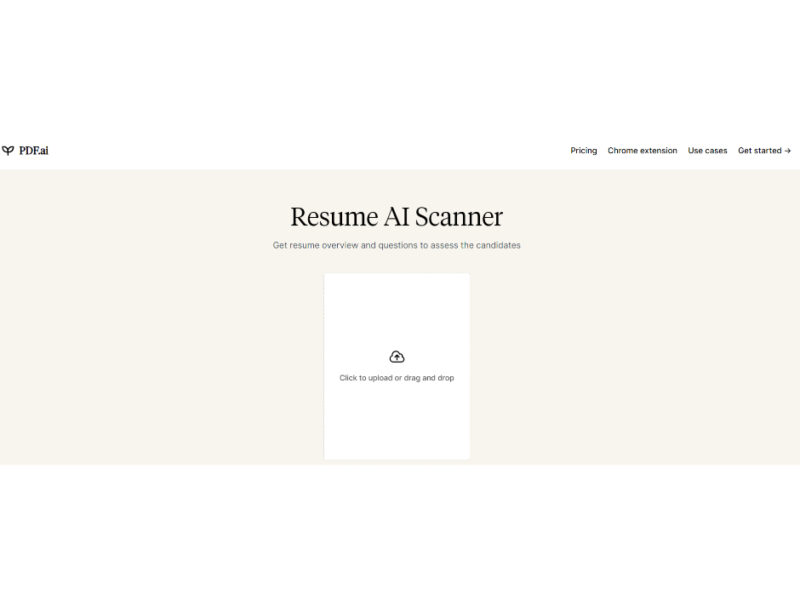
About Resume AI Scanner
Use Cases
Use Case 1: Streamlining Technical Interviews for Busy Lead Developers
Problem: Technical leads often have to jump from coding tasks directly into interviews with very little time to study a candidate’s specific history, leading to generic questions that don't reveal the candidate's true depth.
Solution: This tool allows the lead developer to instantly analyze a candidate's GitHub projects or tech stack mentioned in the resume and receive a list of targeted technical questions that probe for actual expertise rather than surface-level knowledge.
Example: A lead dev uploads a Senior Frontend Developer's resume. The AI notices a niche library mentioned (e.g., RxJS) and generates the question: "I see you used RxJS for state management at [Previous Company]; can you explain how you handled memory leaks in long-lived observables?"
Use Case 2: Empowering Small Business Owners in Niche Hiring
Problem: Small business owners often need to hire for roles outside their own expertise (e.g., a bakery owner hiring a digital marketer). They may not know which specific questions will help them identify a high-quality professional versus someone who just uses buzzwords.
Solution: By scanning the marketer’s resume, the tool identifies the specific platforms and strategies the candidate claims to know and provides the owner with "litmus test" questions to verify that experience.
Example: An owner scans a resume listing "SEO Optimization." The tool suggests: "You mentioned increasing organic traffic by 40% at your last job; what was your specific process for identifying 'low-hanging fruit' keywords during that campaign?"
Use Case 3: Standardizing Large-Scale Recruitment for HR Teams
Problem: In high-volume hiring scenarios, HR teams need to ensure that different interviewers are asking consistent, high-quality questions that are actually relevant to the candidate's specific career trajectory to avoid bias or "fluff" conversations.
Solution: Recruiters can use the tool to generate a standardized but personalized interview guide for every candidate in the pipeline, ensuring that every interview focuses on the candidate's unique accomplishments.
Example: An HR coordinator scans five different resumes for a Project Manager role. The tool generates a unique set of three "deep-dive" questions for each candidate based on their specific industry background (e.g., construction vs. software), which is then handed to the department head before the interview.
Use Case 4: Cross-Functional Interview Panel Preparation
Problem: When a content creator is interviewed by a panel that includes a data analyst or a sales lead, those non-creative peers often struggle to ask questions that bridge the gap between their department and the candidate's skills.
Solution: The tool helps non-specialist interviewers understand the candidate's resume by translating their experience into practical, departmental-focused questions.
Example: A Sales Manager is interviewing a Content Creator. The AI scans the creator's resume and suggests: "You mentioned your content led to a 15% increase in lead quality; how did you collaborate with the sales team to define what a 'high-quality lead' looked like for that project?"
Similar Tools You Might Like
Discover more tools in the same category
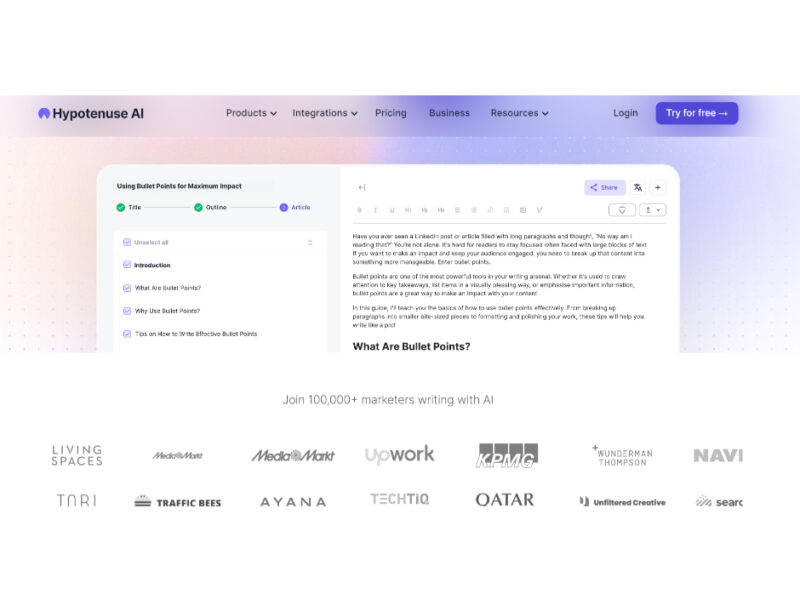
Hypotenuse ai
Hypotenuse AI is a state-of-the-art AI Writing Assistant and Text Generator designed to streamline and …
Explore Related Categories
Live Preview:
Updates automatically with live stats
Copied to clipboard!