OpenAI Text Classifier
Welcome to our innovative and cutting-edge tool where you can easily verify if a text has been generated by AI technology. Explore our platform now and discover how accurate and …
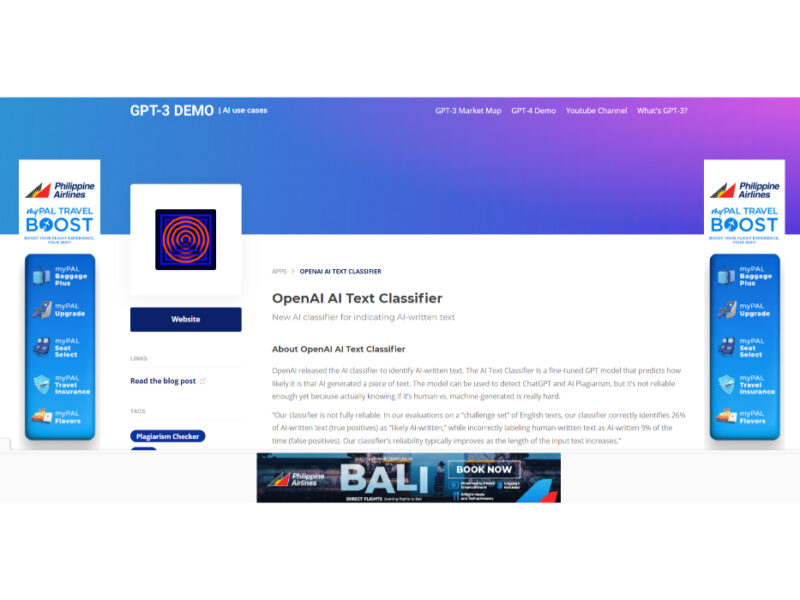
About OpenAI Text Classifier
Use Cases
Use Case 1: Academic Integrity
Problem: Educators face challenges in determining if students have submitted essays written by AI tools like ChatGPT.
Solution: Teachers can use the classifier to evaluate the likelihood that a submission was generated by a machine.
Example: A high school teacher runs a suspicious essay through the tool and receives a 'likely AI-written' result.
Use Case 2: Editorial Quality Control
Problem: Content publishers and blog editors need to ensure that their contributors are providing original, human-written content for SEO and brand trust.
Solution: Editors can screen freelance submissions to verify authenticity before publication.
Example: An online magazine editor checks an article to ensure it does not trigger AI detection flags.
Use Case 3: Identifying AI Plagiarism
Problem: Organizations need to differentiate between original human thought and derivative AI-generated content in professional reports.
Solution: The tool identifies text that mimics AI patterns, helping to flag potential plagiarism.
Example: A research organization uses the tool to validate that a white paper was produced by their staff rather than a chatbot.
Key Features
- Fine-tuned GPT model prediction
- AI-generated text detection
- Identification of ChatGPT outputs
- Increased reliability with longer inputs
- Probability-based origin prediction
- English language text evaluation
Similar Tools You Might Like
Discover more tools in the same category
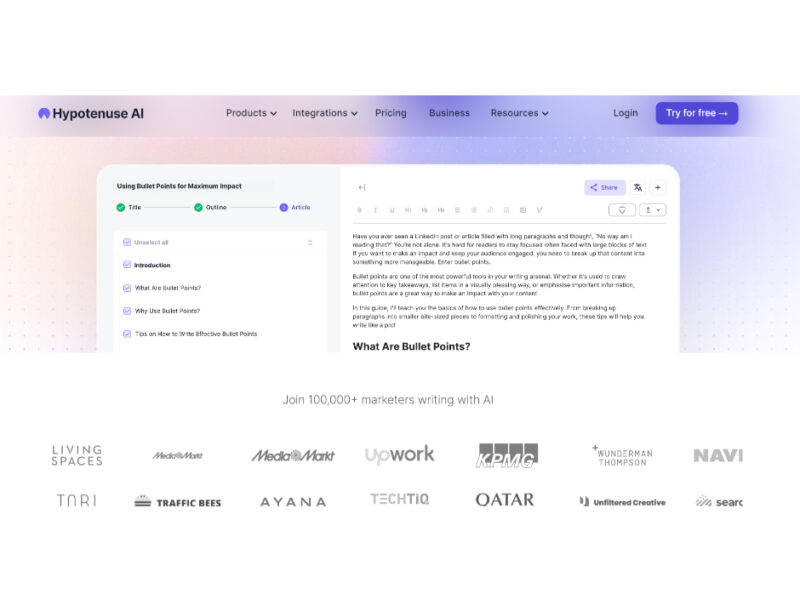
Hypotenuse ai
Hypotenuse AI is a state-of-the-art AI Writing Assistant and Text Generator designed to streamline and …
Explore Related Categories
Live Preview:
Updates automatically with live stats
Copied to clipboard!