MarsAi
Mars is a groundbreaking AI-powered programming platform that significantly accelerates application development. Tailored for developers, artists, collectors, businesses, and organizations, Mars offers a versatile suite of tools designed to streamline …
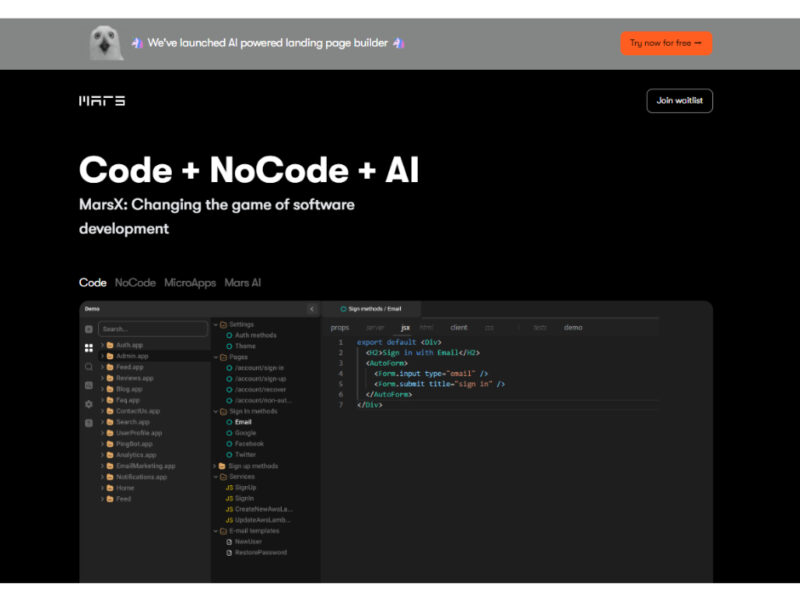
About MarsAi
Use Cases
Use Case 1: Rapid MVP Development for Niche Gig Economy Startups
Problem: Founders often spend six to twelve months and hundreds of thousands of dollars building the infrastructure for "Uber for X" services (like on-demand dog walking or tutoring), including real-time chat, payments, and mobile apps.
Solution: MarsX provides a "Uber for X" MicroApp that includes pre-built web and mobile interfaces, payment integrations, and chat functionality. Founders can launch a functional MVP using No-Code settings and only use the "Code" mode to implement unique business logic or niche features.
Example: A startup entrepreneur wants to build "Uber for Private Tutors." They use the MicroApp to handle the booking and payment flow instantly, then spend two weeks in the Mars IDE writing custom JavaScript to handle specific academic certification verification steps.
Use Case 2: Scaling No-Code Projects into Complex Custom Applications
Problem: Most No-Code platforms have a "performance wall" or "functionality ceiling." When a business outgrows the platform's capabilities, they are forced to throw away their No-Code work and pay developers to rebuild the entire application from scratch using traditional code.
Solution: MarsX allows a seamless transition from No-Code to Code within the same environment. Users can build 90% of their app using MicroApps and then switch to the full-scale JavaScript/TypeScript IDE to build the final 1% of highly custom features without losing any data or logic.
Example: An e-commerce brand starts with a standard marketplace MicroApp. As they grow, they decide they need a proprietary AI-driven recommendation engine. Instead of migrating to a new platform, their developer enters "Code" mode in MarsX and writes the custom logic directly into the existing project.
Use Case 3: Launching Specialized AI-Powered Content Platforms
Problem: Building a tool that leverages AI (like an automated SEO agent or a custom GPT directory) requires managing databases, user authentication, and API integrations, which can be overwhelming for solo founders or marketers.
Solution: MarsX offers specialized AI-focused MicroApps and templates (like SEObot or AllGPTs). Users can leverage the built-in AI capabilities of the platform to create "wrappers" or autonomous agents that solve specific marketing or content problems.
Example: A content marketer builds an "AI Travel Itinerary Generator." They use a "Collections of Items" MicroApp for the UI and the Mars AI engine to process user prompts, launching a subscription-based SaaS in weeks rather than months.
Use Case 4: Creating Branded Niche Video Streaming Services
Problem: Traditional video streaming setups are technically demanding, requiring complex backend management for video hosting, subscriptions, and cross-platform (iOS/Android/Web) synchronization.
Solution: MarsX provides a "Video Streaming" MicroApp that mimics Netflix-like functionality. It includes the database, backend, and frontend for multiple platforms out of the box.
Example: A fitness influencer wants to launch a private "Workout-on-Demand" app. They use the Video Streaming MicroApp to host their library, set up a freemium model where certain videos require a subscription, and deploy native apps to both the App Store and Google Play using the same MarsX codebase.
Use Case 5: Secure, Self-Hosted Marketplaces for Enterprises
Problem: Large corporations often need internal marketplaces or peer-to-peer tools but cannot use standard No-Code tools due to "vendor lock-in" or strict GDPR and security compliance requirements.
Solution: Because the Mars engine is open-source and runs on a simple JS server, enterprises can host the entire platform on their own local servers or private clouds. This gives them total ownership of the data and the ability to audit the code.
Example: A large university wants an internal peer-to-peer marketplace for students to sell textbooks and lab equipment. They deploy MarsX on their own AWS account, ensuring all student data stays within their controlled environment while utilizing the "Peer-to-Peer Marketplace" MicroApp to save development time.
Key Features
- Hybrid No-Code/High-Code IDE
- Full-stack Micro-App architecture
- Seamless No-Code to Code transition
- Open-source self-hosted engine
- Third-party Micro-App marketplace
- Integrated JavaScript and TypeScript development
- Multi-platform native deployment
- Zero-loss logic switching
Similar Tools You Might Like
Discover more tools in the same category
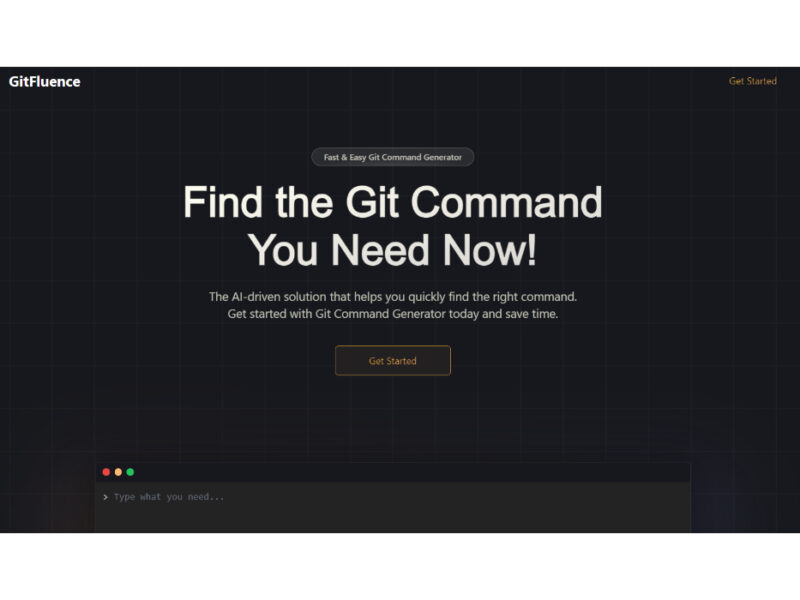
GitFluence
GitFluence is an innovative, AI-powered web application designed to streamline the process of finding and …
Explore Related Categories
Live Preview:
Updates automatically with live stats
Copied to clipboard!