Hypereficient
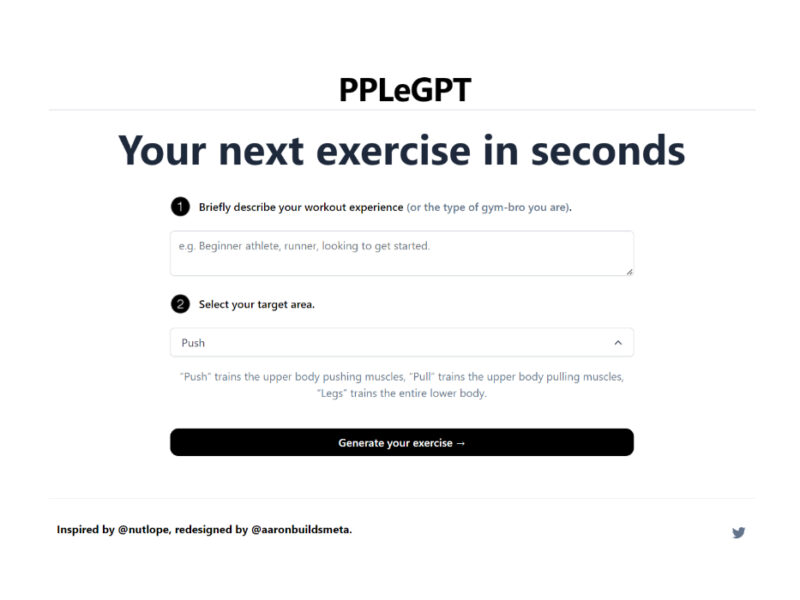
Hyperficient is an advanced AI tool tailored for optimizing workout routines to maximize muscle gain efficiently. Leveraging insights from over 1000 scientific research papers, it fine-tunes workout programs to align …
About Hypereficient
Use Cases
Use Case 1: Optimizing "High-ROI" Workouts for Busy Developers
Problem: Software developers and tech professionals often work long, sedentary hours and have limited time for the gym. They want to build muscle effectively but struggle with "junk volume"—performing exercises that take time but yield minimal results.
Solution: Hyperficient uses its AI model, trained on over 1,000 research papers, to eliminate inefficient exercises. It optimizes the workout duration by focusing only on the most scientifically effective movements for muscle hypertrophy.
Example: A developer with only 45 minutes to spare three times a week inputs their current routine into Hyperficient. The tool identifies that their current shoulder routine is redundant and replaces it with a specific set of movements that maximize the "stretch-mediated hypertrophy" mentioned in recent literature, cutting their gym time by 20% while increasing muscle stimulation.
Use Case 2: Science-Backed Content Creation for Fitness Influencers
Problem: Fitness content creators and marketers face a saturated market where "bro-science" is common. To build authority and trust, they need to back their workout recommendations with hard data and scientific research, but they don't have the time to read thousands of academic journals.
Solution: Hyperficient acts as a research assistant. Creators can use the tool to validate their workout programs against current scientific standards, ensuring the content they provide to their audience is "evidence-based."
Example: A fitness YouTuber planning a "Perfect Full Body Routine" video uses Hyperficient to audit their suggested exercises. The tool provides the scientific rationale for choosing a 45-degree incline press over a flat bench press, giving the creator high-authority talking points and "science-backed" labels for their marketing thumbnails.
Use Case 3: Data-Driven Wellness Programs for High-Performance Teams
Problem: Startup founders and business owners want to incorporate fitness into their corporate culture to boost productivity, but generic "gym memberships" often lead to aimless workouts and injury. They need a system that treats fitness with the same data-driven rigor as their business KPIs.
Solution: By using Hyperficient, a business can provide its team with a tool that removes the guesswork from training. This ensures employees are using their "wellness hours" as efficiently as possible, leading to better physical results and higher mental clarity without the burnout of overtraining.
Example: A marketing agency implements a "Hyper-Efficient" fitness challenge. Employees use the tool to generate personalized, science-based routines. Because the AI focuses on efficiency and scientific accuracy, the team sees measurable strength gains without needing to spend two hours a day in the gym, maintaining a healthy work-life-fitness balance.
Use Case 4: Personal Training Routine Audits for Fitness Tech Startups
Problem: Developers building fitness apps or coaching platforms need a benchmark to ensure their automated workout generators are actually effective and up-to-date with the latest sports science.
Solution: Hyperficient serves as a "Gold Standard" auditing tool. Product managers and developers can cross-reference their app’s logic against Hyperficient’s AI-generated suggestions to ensure their users are getting high-quality, modern advice.
Example: A product team developing a "Smart Coach" app uses Hyperficient to audit their algorithm's leg-day suggestions. They discover that their current logic focuses too much on compound movements and not enough on long-length partials, a concept Hyperficient highlights from recent research, allowing them to upgrade their app's value proposition.
Key Features
- AI-driven workout optimization
- Science-based routine generation
- Hypertrophy-focused program design
- Evidence-based training protocols
- Research-backed exercise selection
- Automated program fine-tuning
- Data-driven muscle gain strategies
Similar Tools You Might Like
Discover more tools in the same category

AquaAdvisor – AI water tracker
AquaAdvisor, powered by GPT and AI, your intelligent voice-controlled hydration assistant. Effortlessly manage water intake, …
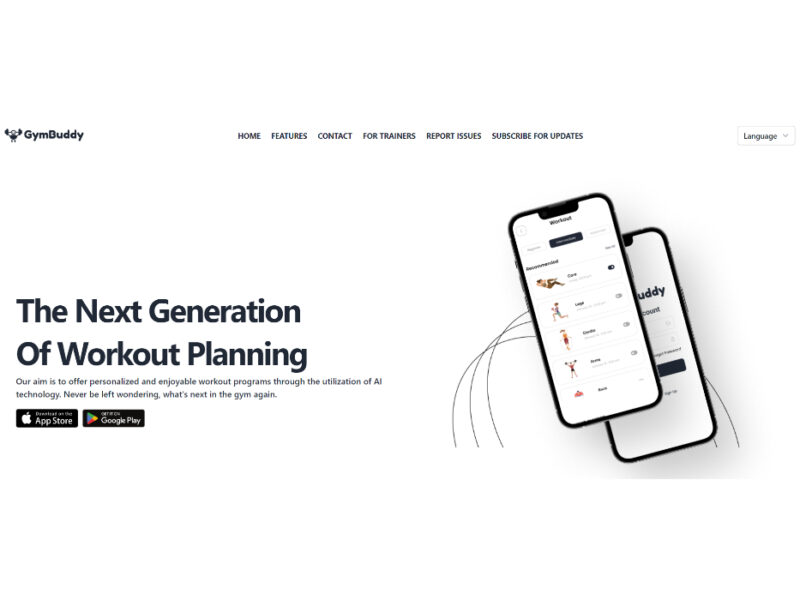
GymBuddy AI
GymBuddy is an innovative workout planning application, designed to revolutionize the way users approach fitness. …

Explore Related Categories
Live Preview:
Updates automatically with live stats
Copied to clipboard!