Granica
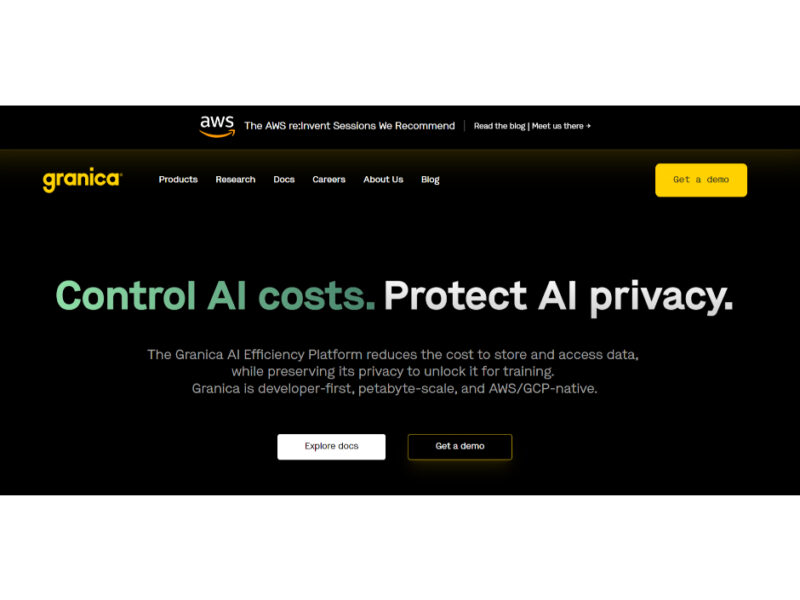
Granica AI Efficiency Platform revolutionizes data storage and access for AI training, focusing on petabyte-scale data management and compatibility with leading cloud providers.
About Granica
Use Cases
Use Case 1: Reducing Cloud Storage Overhead for High-Volume Log Retention
Problem: Security-focused SaaS companies and enterprise IT departments often generate dozens of petabytes of telemetry, event logs, and audit trails annually. Storing this data in cloud environments (like AWS S3 or GCP) to meet compliance or for long-term forensics is prohibitively expensive, often consuming a massive portion of the IT budget.
Solution: Granica Crunch provides self-optimizing, lossless compression specifically designed for structured enterprise logs and events. It can strip out 45–80% of the data volume without requiring any changes to existing data pipelines. By deploying inside the user's VPC, it ensures that sensitive log data remains secure while drastically lowering the monthly cloud storage bill.
Example: A Global Revenue-Intelligence SaaS platform uses Granica to compress 20 PB of data. By applying Granica’s entropy-aware compression, they halve their storage footprint, resulting in an annual ROI of over $5M without disrupting their Hive-based workflows.
Use Case 2: Accelerating Query Performance for Massive Data Lakehouses
Problem: As data lakes grow from terabytes to petabytes, query performance often degrades. Traditional optimization features (like Databricks’ "Optimize") can be slow, expensive to run, and fail to keep up with the rate of data ingestion, leading to "data bloat" that frustrates data engineers and slows down business intelligence.
Solution: Granica acts as a self-improving data factory that continuously learns query patterns and reshapes data compression on the fly. It increases throughput and reduces latency, often outperforming native cloud optimization tools. Because it is transparent to the stack, it works seamlessly with Trino, Spark, and Snowflake to speed up "fact" and "mixed" workloads.
Example: A consumer social-media unicorn replaces their native Delta Lake optimization with Granica. They achieve a 50% storage saving and find that queries run 2x faster and at a lower cost than using the built-in Databricks features.
Use Case 3: Optimizing AI Training Sets for Large-Scale Machine Learning
Problem: Training state-of-the-art AI models requires massive datasets. Moving this data from storage to compute clusters creates a significant bottleneck in the ML lifecycle, and the sheer cost of storing high-cardinality training data can limit the amount of information a team can afford to keep for "real-world" reasoning.
Solution: Granica is built specifically for AI infrastructure, turning "exabyte-scale noise into real-time reasoning." Its compression algorithms are optimized for the high-cardinality data often used in machine learning. Furthermore, its research-backed subsampling and surrogate data integration help teams select the most valuable data points for training, reducing the computational complexity of learning.
Example: A healthcare provider managing 100+ PB of imaging and patient data uses Granica to compress their BigQuery and Iceberg layers. This reduces data transfer costs by 2x when moving datasets to GPU clusters for model training, while the "lossless" nature of the tool ensures that medical data integrity is never compromised for the sake of savings.
Use Case 4: Streamlining Multi-Cloud Data Governance and Compliance
Problem: Large enterprises operating across multiple cloud providers (AWS, GCP, Azure) struggle with inconsistent data optimization and the high cost of data egress and transfer. Data engineers spend too much time manually managing data layouts and ensuring SOC-2 compliance across different regional buckets.
Solution: Granica offers a "hands-off orchestration" layer that works across any lake (Iceberg, Delta, etc.) and any major cloud. It provides trusted controls including SOC-2 Type 2 compliance and full audit logs. Engineers set a cost-performance target once, and Granica auto-scales the optimization forever, freeing up engineering time to focus on building new features rather than managing data infrastructure.
Example: A digital experience analytics company uses Granica to achieve a 3x lower Total Cost of Ownership (TCO) for their data platform. Their engineering team spends 3x less time on manual data-lake optimization tasks, while immutable logs are piped directly to their finance and compliance tools for easy auditing.
Key Features
- Self-optimizing lossless data compression
- Zero-code data lake integration
- Secure in-VPC cloud deployment
- Continuously adaptive query-aware optimization
- Hands-off cost-performance orchestration
- Multi-platform data lake compatibility
- Real-time immutable data logging
Similar Tools You Might Like
Discover more tools in the same category
ReliableGPT
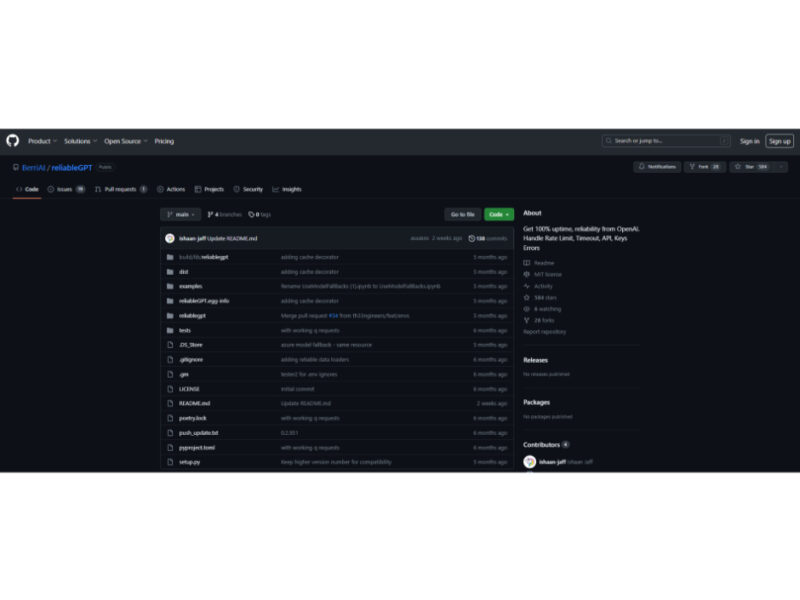
ReliableGPT is a robust and innovative tool designed to enhance the stability and reliability of …
Opera One Browser
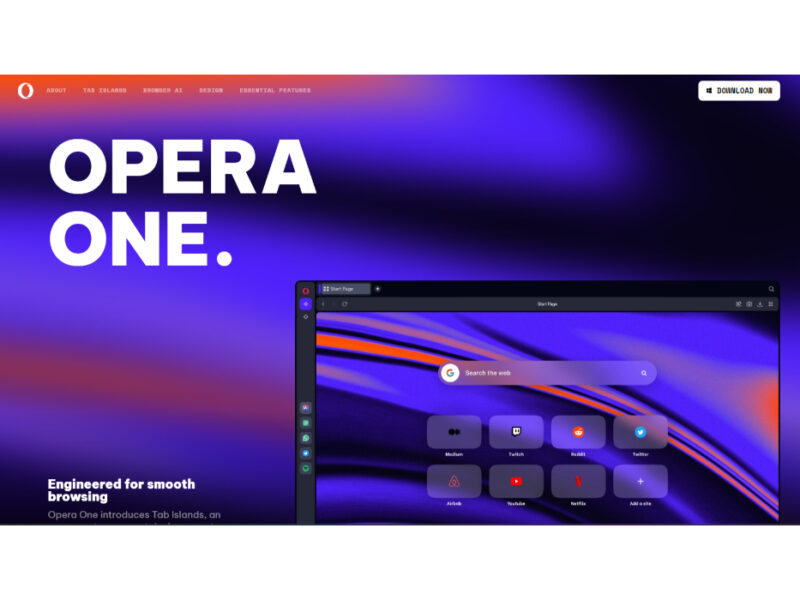
Opera One is a next-generation browser that emphasizes a liquid navigation experience. It stands out …
MindStudio
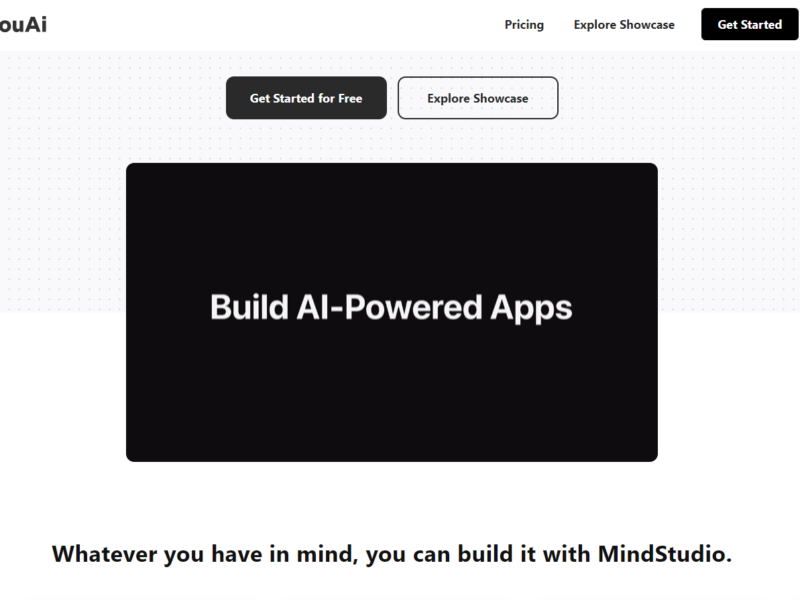
MindStudio by YouAi is an innovative platform that enables users to create personalized AI applications …
Live Preview:
Updates automatically with live stats
Copied to clipboard!