Grammarly
Grammarly is a highly advanced AI-powered online writing assistant that significantly enhances the quality of users’ writing. Its primary function is to provide real-time feedback on various aspects of writing, …
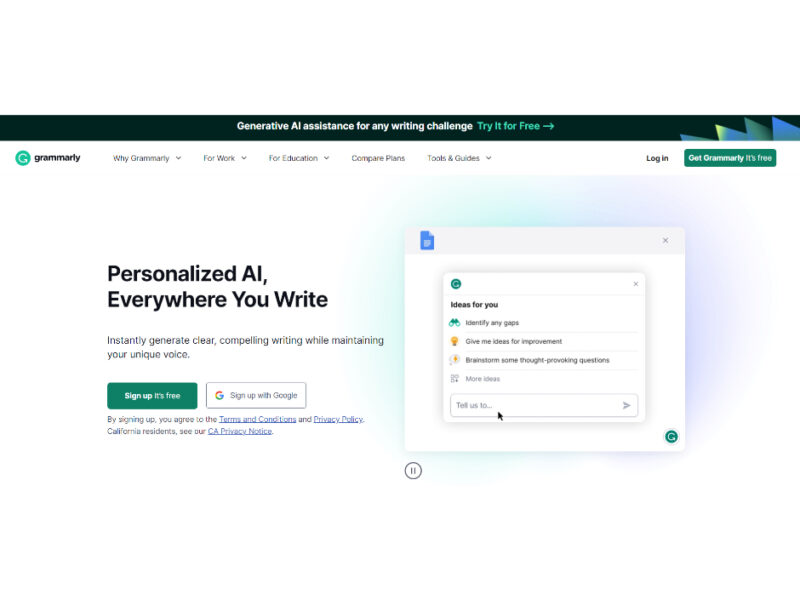
About Grammarly
Use Cases
Use Case 1: Optimizing Internal Team Messaging and Deadlines
Problem: In fast-paced environments like Slack or Microsoft Teams, messages are often sent hastily, leading to missing details (like specific deadlines), typos, or an unintended blunt tone that can cause friction among coworkers.
Solution: Grammarly integrates directly into messaging platforms to provide real-time suggestions. It identifies missing information—such as a specific date for a task—and suggests rephrasing to ensure the tone remains professional and clear.
Example: A developer is typing a quick update in Slack: "I'll finish the API docs later." Grammarly flags this and suggests adding a specific deadline for clarity. The user changes it to: "I will complete the API documentation by 4:00 PM today," ensuring the team has actionable information.
Use Case 2: Enforcing Brand Voice in Customer Support
Problem: Customer support teams often struggle to maintain a consistent brand voice across hundreds of tickets. Different agents might use varying tones—some too casual, others too stiff—which can confuse customers and weaken brand identity.
Solution: Using the "Pro" or "Enterprise" features, companies can upload their brand style guides. Grammarly then provides real-time suggestions within tools like Zendesk to help agents stay on-brand and maintain a confident, helpful tone.
Example: A support agent writes, "I guess we can probably fix that for you soon." Grammarly's brand style feature flags the hesitant language and suggests a more confident, on-brand alternative: "We are happy to resolve this issue for you immediately."
Use Case 3: Drafting and Refining High-Stakes Project Proposals
Problem: Creating a project proposal from scratch is time-consuming. Writers often struggle to strike the right balance between being "convincing" and "concise," often leading to wordy documents that stakeholders may find difficult to digest.
Solution: Users can leverage Grammarly’s generative AI prompts to draft initial outlines or sections. Once drafted, the tool's "full-sentence rewrite" and "reader reaction" features help the user refine the text to ensure it stands up to scrutiny from management.
Example: A marketer uses a Grammarly AI prompt to generate a draft for a new campaign proposal. After the draft is generated, they use the "Get a read on your writing" feature to see how a manager might react, then apply "conciseness" suggestions to cut 20% of the fluff while keeping the core message persuasive.
Use Case 4: Improving Content Quality for Subject-Matter Experts
Problem: Experts (like engineers or researchers) often have deep technical knowledge but may struggle to communicate complex ideas in a way that is clear and "mistake-free" for a broader audience.
Solution: Grammarly provides "expert advice" and clarity insights that help subject-matter experts strengthen their work. It identifies jargon that might need simplifying and ensures the writing is polished enough to be trusted by outside organizations.
Example: A technical lead writes a white paper on data security. Grammarly identifies long, convoluted sentences and suggests breaking them up for better readability. It also checks for grammatical precision, ensuring the technical document looks authoritative and professional before publication.
Key Features
- Real-time writing suggestions
- Tone and clarity adjustments
- Full-sentence rewrite suggestions
- Prompt-based generative AI text
- Audience reaction feedback
- Custom brand style guides
- Enterprise data loss prevention
Similar Tools You Might Like
Discover more tools in the same category



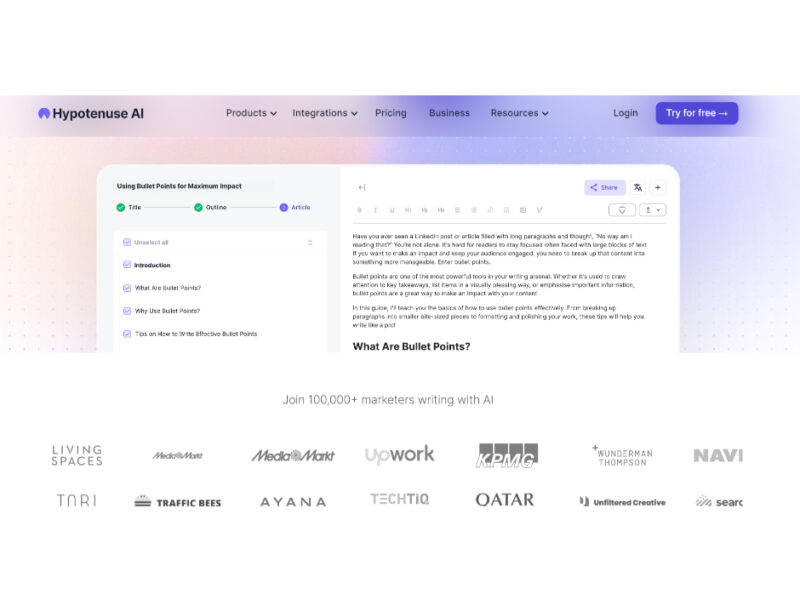
Hypotenuse ai
Hypotenuse AI is a state-of-the-art AI Writing Assistant and Text Generator designed to streamline and …
Explore Related Categories
Live Preview:
Updates automatically with live stats
Copied to clipboard!