GET3D (Nvidia)
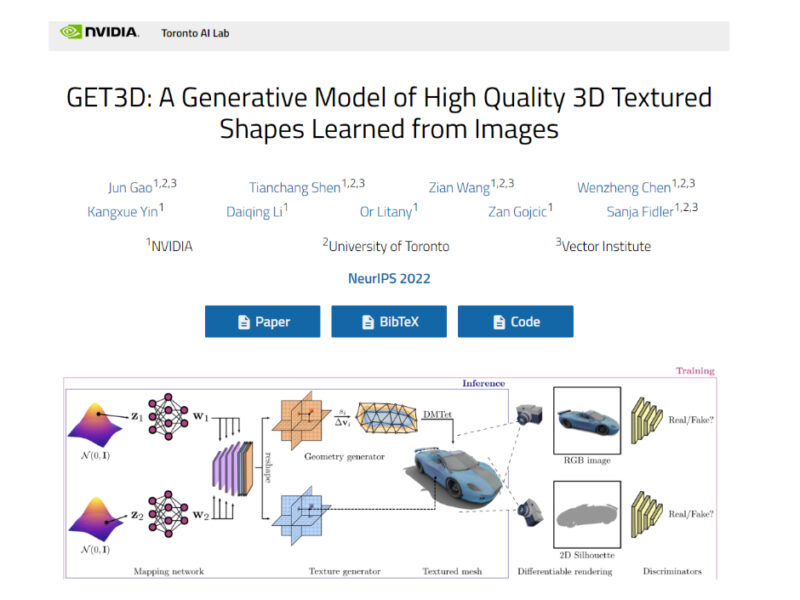
Introducing our exhilarating and captivating Generative 3D Textured Shapes from Images. Transform your visuals with our cutting-edge technology, creating stunning and unique designs. Unleash your creativity with our vast collection …
About GET3D (Nvidia)
Use Cases
Use Case 1: Rapid Game Asset Creation
Problem: Game developers often need a massive variety of high-quality 3D assets, like cars and furniture, which are time-consuming and expensive to model manually.
Solution: GET3D allows developers to generate diverse, high-fidelity textured meshes that can be directly imported into standard rendering engines.
Example: A developer generates 50 unique car models for a racing game background in minutes instead of weeks.
Use Case 2: Virtual World Population
Problem: Creating large-scale metaverse environments requires a vast quantity of unique assets to avoid repetitive visuals.
Solution: The tool's ability to generate shapes with arbitrary topology and rich geometric details makes it ideal for scaling 3D content creation.
Example: Building a virtual city populated with unique buildings and street props generated from image datasets.
Use Case 3: Interactive Product Design
Problem: Designers need to iterate quickly on different textures and shapes for products like footwear or furniture.
Solution: GET3D features disentangled geometry and texture latent codes, allowing designers to swap textures on a specific shape or vice versa.
Example: A shoe designer exploring hundreds of color and material variations on a single 3D sneaker model.
Use Case 4: Text-to-3D Prototyping
Problem: Users without 3D modeling expertise often struggle to create custom 3D assets for creative projects.
Solution: Using text-guided shape generation via CLIP, users can generate complex 3D assets simply by providing a written description.
Example: A content creator typing "medieval stone chair" to instantly generate a 3D model for a social media post.
Key Features
- Direct generation of textured meshes
- High-quality geometry and complex topology
- Disentangled geometry and texture controls
- Seamless integration with 3D engines
- Text-guided 3D shape generation
- Unsupervised material and lighting generation
- Smooth latent space shape interpolation
- Training from 2D image collections
Similar Tools You Might Like
Discover more tools in the same category
Flythroughs
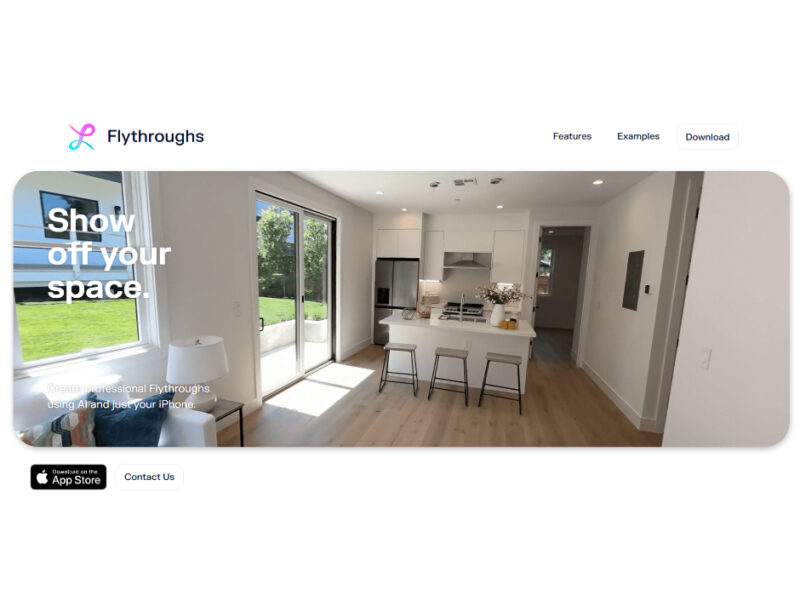
Our cutting-edge AI technology enables users to effortlessly produce stunning Flythroughs of professional quality using …
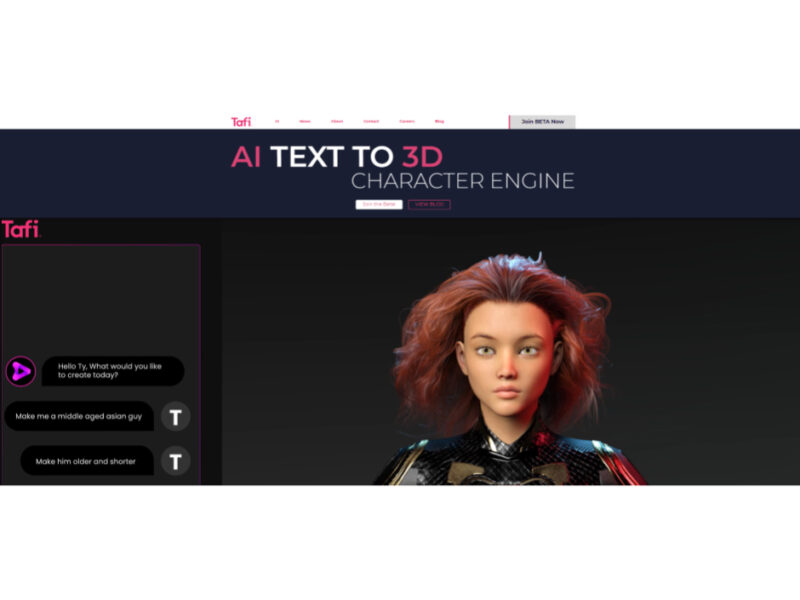
Tafi Avatar
Experience the revolutionary Text-to-3D Character Engine that brings your words to life! Create dynamic and …

Explore Related Categories
Live Preview:
Updates automatically with live stats
Copied to clipboard!