fast.ai
Welcome to our cutting-edge non-profit research group that is passionately dedicated to the fields of deep learning (DL) and artificial intelligence (AI). We take pride in providing high-quality and insightful …
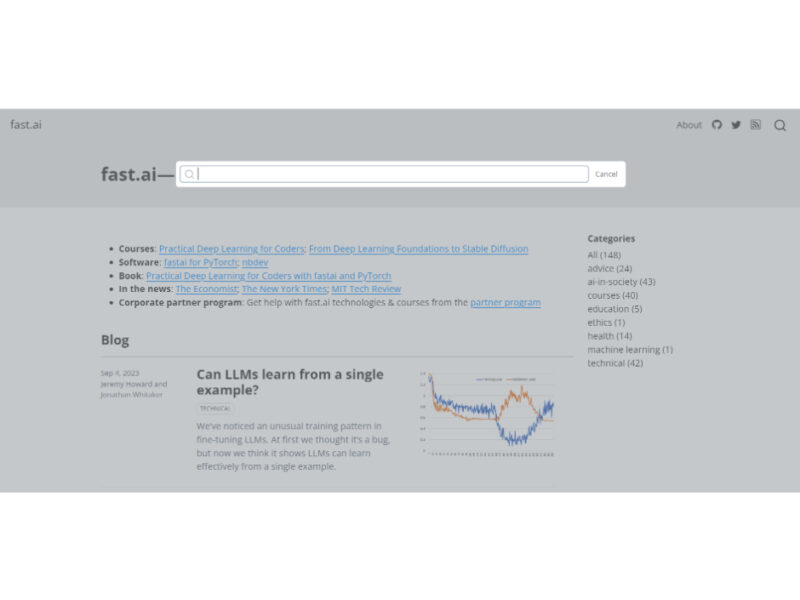
About fast.ai
Use Cases
Use Case 1: Rapid Prototyping of State-of-the-Art Computer Vision Models
Problem: Developers and startups often need to build proof-of-concept AI models (like image classifiers or object detectors) quickly, but traditional deep learning frameworks require massive amounts of boilerplate code and complex hyperparameter tuning.
Solution: The fastai library provides a "layered API" that allows practitioners to achieve state-of-the-art results with just a few lines of code. It automates best practices—like the "Learning Rate Finder" and "1cycle scheduling"—which are typically hidden in academic papers.
Example: A small e-commerce business wants to automatically tag product images. Using fastai, a developer can load a pre-trained model, fine-tune it on the company’s specific catalog, and deploy a high-accuracy classifier in an afternoon rather than weeks.
Use Case 2: Transitioning from Data Science Notebooks to Production Software
Problem: Data scientists often work in Jupyter Notebooks, which are great for exploration but notoriously difficult to convert into maintainable, tested, and documented Python libraries. This creates a "friction gap" between research and production.
Solution: nbdev is a tool mentioned in the content that allows developers to write, test, document, and distribute Python packages entirely within Jupyter Notebooks. It solves the "Jupyter+git" problem by handling merge conflicts and automatically generating documentation from notebook cells.
Example: A biotech team researching microscope slides uses nbdev to develop their analysis algorithms. They write their code and documentation in one place; nbdev then automatically exports it as a professional Python library that their engineering team can immediately integrate into the company's cloud infrastructure.
Use Case 3: Domain-Specific Fine-Tuning of Large Language Models (LLMs)
Problem: Generic LLMs often lack the specific "vocabulary" or formatting requirements of specialized industries like law, medicine, or niche technical fields. Training these models from scratch is prohibitively expensive.
Solution: fast.ai provides resources and research (like the "Let’s Build the GPT Tokenizer" guide and "How to Solve it With Code") that teach developers how to efficiently fine-tune LLMs. Their research into "learning from a single example" helps developers adapt models to specific tasks with minimal data.
Example: A legal tech firm uses fast.ai's tokenization and fine-tuning techniques to adapt a foundation model to understand 18th-century maritime law documents, enabling automated summarization that a standard GPT model would struggle with.
Use Case 4: Auditing AI Systems for Ethical Bias and Social Impact
Problem: Businesses and government agencies face increasing pressure (and regulation) to ensure their automated systems aren't biased or harmful, but most technical teams lack a framework for "Data Ethics."
Solution: fast.ai offers a dedicated Applied Data Ethics course and extensive research on "AI Harms." This helps teams move beyond simple "fairness" metrics to understand the collective and communal impacts of their algorithms.
Example: A fintech company building a loan-approval algorithm uses the fast.ai ethics framework to conduct a "pre-mortem" on their data. They identify that their training data excludes certain demographics and use fast.ai's techniques to adjust their data pipeline before the model is ever deployed, avoiding potential legal and reputational damage.
Use Case 5: Upskilling Engineering Teams into AI-Capable Units
Problem: Many companies have talented software engineers who feel intimidated by the heavy mathematics (calculus and linear algebra) usually required to start learning AI.
Solution: The "Practical Deep Learning for Coders" course uses a "top-down" teaching method. It starts with code and functional models, only diving into the math once the student understands the practical application.
Example: A traditional SaaS company wants to add generative AI features to their product. Instead of hiring expensive specialized researchers, they put their existing senior backend engineers through the fast.ai curriculum. Within months, the engineers are able to implement Stable Diffusion and LLM features directly into the existing codebase using the fastai ecosystem.
Key Features
- Layered deep learning API
- Notebook-driven software development framework
- Reversible data transformation pipelines
- Rapid state-of-the-art model implementation
- Integrated literate programming tools
- Simplified dataset downloading and verification
- Specialized GPU resource management
- Multi-dispatch Python library support
Similar Tools You Might Like
Discover more tools in the same category
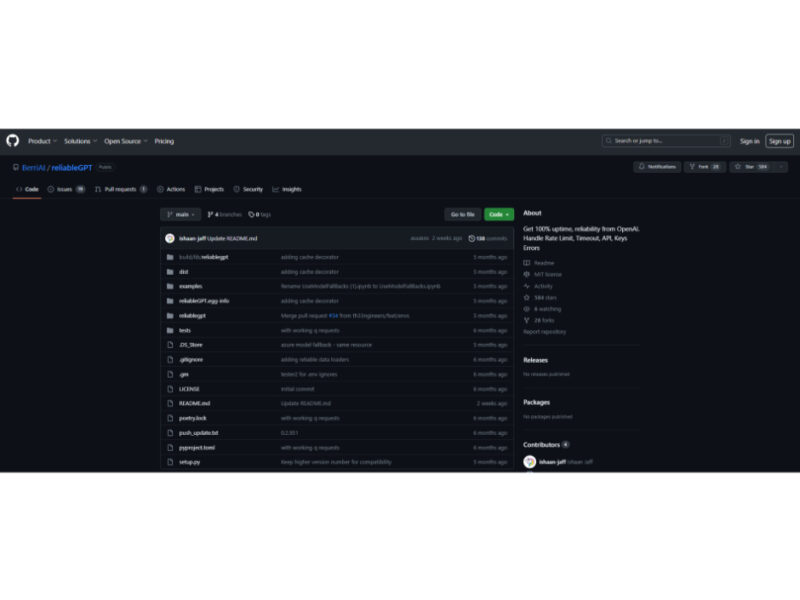
ReliableGPT
ReliableGPT is a robust and innovative tool designed to enhance the stability and reliability of …
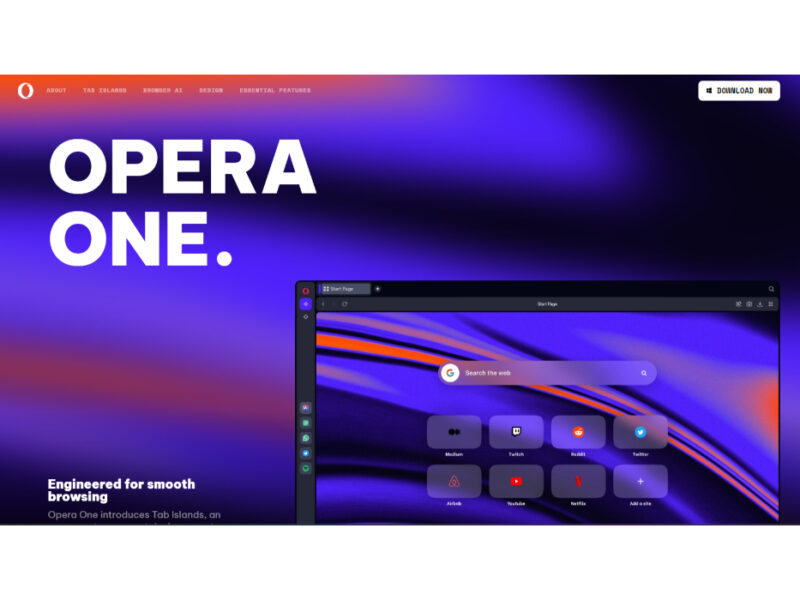
Opera One Browser
Opera One is a next-generation browser that emphasizes a liquid navigation experience. It stands out …
MindStudio
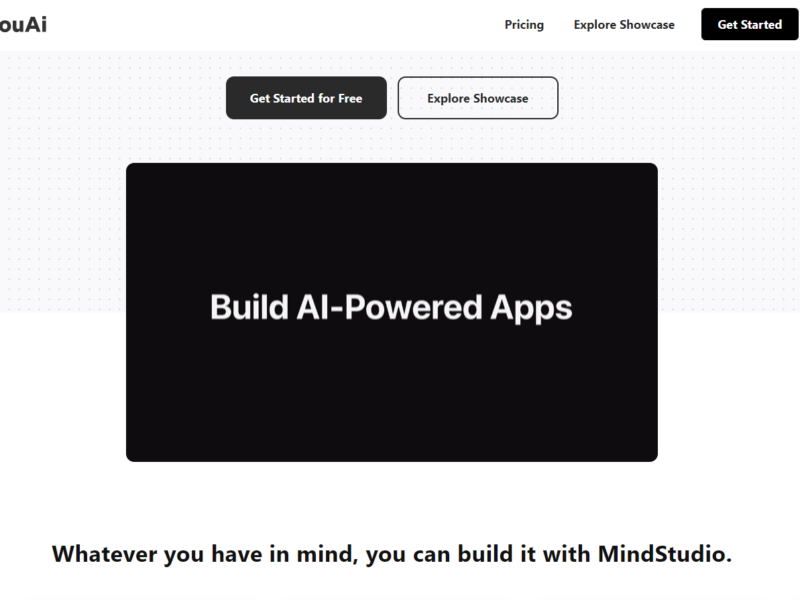
MindStudio by YouAi is an innovative platform that enables users to create personalized AI applications …
Explore Related Categories
Live Preview:
Updates automatically with live stats
Copied to clipboard!