Cron AI
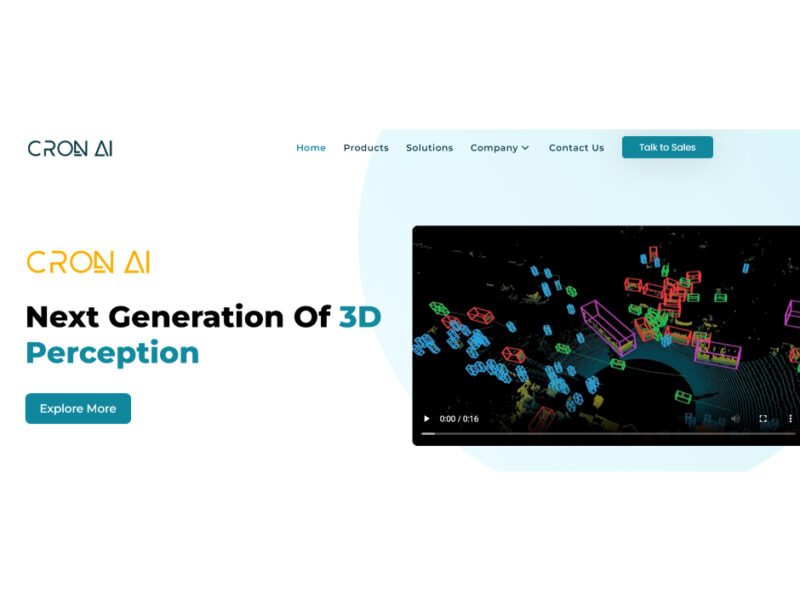
Cron AI revolutionizes the way cron jobs are created by leveraging AI technology to simplify and expedite the process. This AI-powered cron expression generator is designed to be highly user-friendly, …
About Cron AI
Use Cases
Use Case 1: Real-Time Traffic Optimization for Smart Intersections
Problem: Traditional traffic management relies on timers or ground loops that cannot accurately detect pedestrians or cyclists, especially in heavy rain, snow, or fog. This leads to inefficient light cycles, congestion, and increased accidents at busy urban intersections.
Solution: Cron AI’s senseEDGE platform processes raw 3D data from LiDAR sensors to provide "street smarts" to infrastructure. Unlike cameras, it provides precise depth and object classification regardless of lighting or adverse weather. It can distinguish between a vehicle, a cyclist, and a pedestrian in real-time, allowing traffic controllers to adjust signals dynamically based on actual demand.
Example: A city department of transportation deploys senseEDGE at a major intersection. During a heavy snowstorm, the AI maintains 99% accuracy in tracking a pedestrian waiting to cross, extending the walk signal automatically to ensure their safety while simultaneously clearing a lane for an approaching emergency vehicle it detected 100 meters away.
Use Case 2: Privacy-Compliant Crowd and Queue Management
Problem: Retailers and event organizers need to understand visitor flow and density to prevent overcrowding and optimize staffing. However, using high-resolution cameras for tracking often raises significant GDPR and privacy concerns regarding facial recognition and data storage.
Solution: senseEDGE uses LiDAR-based 3D perception which is inherently GDPR-compliant. It captures "point clouds" rather than identifiable images, allowing the system to track movements, count individuals, and analyze queue lengths without ever capturing a person's face or identity.
Example: A large airport uses senseEDGE to monitor security checkpoints. The system analyzes the speed and density of the crowd in real-time, predicting a bottleneck 15 minutes before it occurs. Management receives an automated alert to open a new lane, all while ensuring that no personal biometric data is ever recorded or stored.
Use Case 3: All-Weather Perimeter Security for Critical Infrastructure
Problem: Traditional security cameras and motion sensors frequently trigger false alarms due to moving shadows, wind-blown debris, or small animals. Furthermore, they struggle with "blind spots" and lack precise distance data, making it hard to determine if a threat is actually breaching a physical boundary.
Solution: senseEDGE provides high-precision object tracking and classification that filters out environmental noise. By using edge-native deep learning, it can identify a human-sized intruder at the perimeter of a facility (like a power plant or airport runway) and track their exact XYZ coordinates in a global frame, even in total darkness or partial visibility.
Example: A high-security warehouse integrates senseEDGE with its existing security suite. When a person approaches the fence at night, the AI distinguishes them from a stray animal and ignores a swaying tree branch. It then fuses this data with a PTZ (Pan-Tilt-Zoom) camera to automatically lock onto and follow the intruder, providing the security team with an accurate 3D map of the intruder's location.
Use Case 4: Intelligent Automated Parking and Toll Enforcement
Problem: Multi-story parking garages and toll roads struggle with accurate vehicle classification (e.g., distinguishing a van from a car for billing) and monitoring occupancy in tight, dimly lit spaces where GPS and cameras often fail.
Solution: senseEDGE scales from single sensors to complex deployments, providing a "brain" for 3D sensors that can perform seamless object fusion. It allows infrastructure to detect vehicle dimensions precisely and monitor bay occupancy in real-time without needing complex, manual configurations for every new sensor.
Example: A smart parking garage uses senseEDGE to automate its "Find My Car" feature and tolling. As a vehicle enters, the system classifies it by size for appropriate billing and tracks it to an exact parking spot. If a driver parks across two spots, the system identifies the violation immediately and alerts the facility manager, functioning perfectly even in the low-light environment of an underground basement.
Key Features
- Real-time 3D perception software
- Seamless multi-sensor data fusion
- Resource-optimized edge processing
- Automated environmental self-tuning
- Plug-and-play network deployment
- Privacy-first GDPR compliant sensing
- Adaptive all-weather object tracking
- Fast training for new use-cases
Similar Tools You Might Like
Discover more tools in the same category
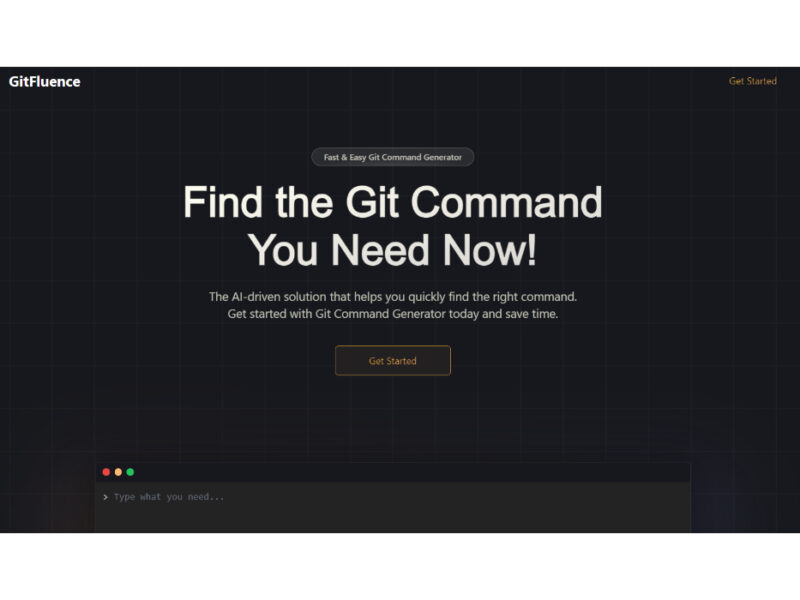
GitFluence
GitFluence is an innovative, AI-powered web application designed to streamline the process of finding and …

Explore Related Categories
Live Preview:
Updates automatically with live stats
Copied to clipboard!